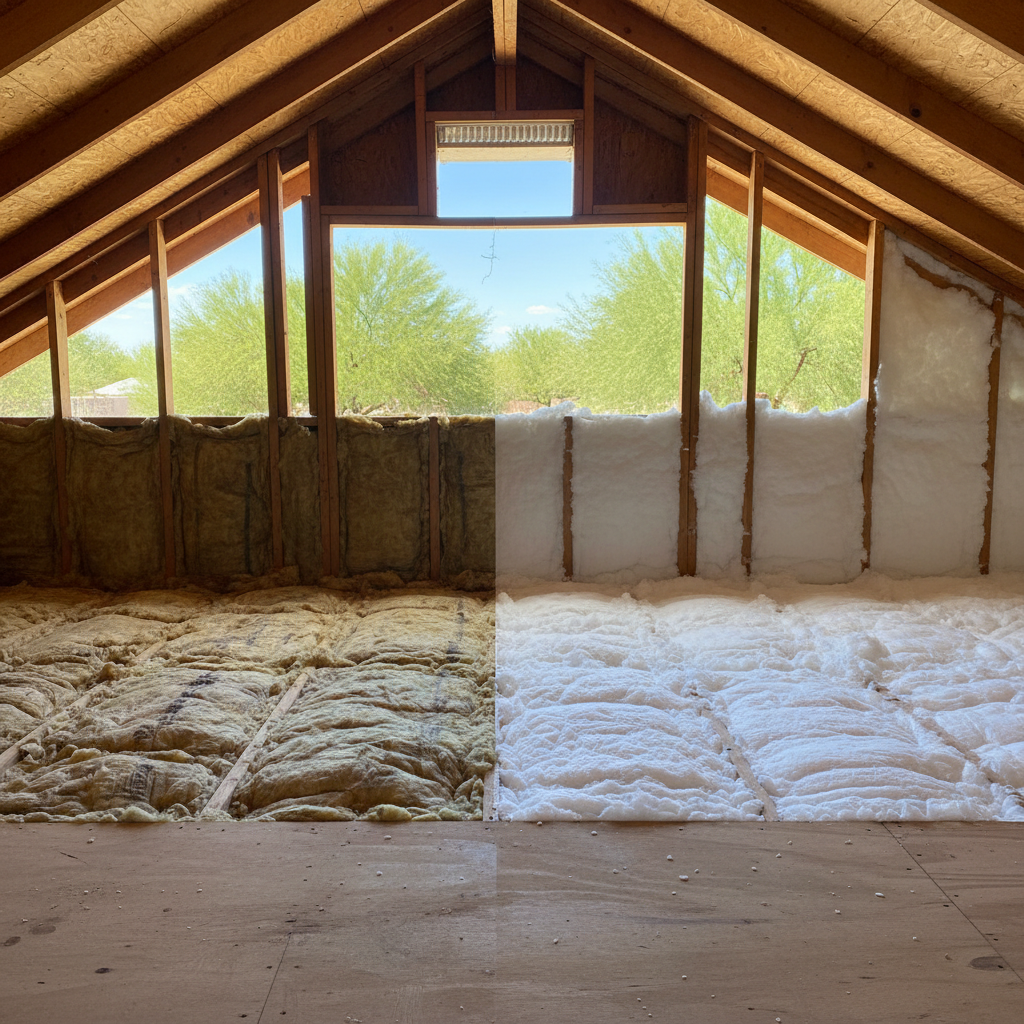
Your shed in Gilbert isn't just a storage box, right? It's really an extension of your home. And if you're like most folks, you've probably got some valuable stuff tucked away in there: tools, gardening supplies, maybe even a workbench for your projects. But come July, when it's 115 degrees outside, that shed can turn into an oven, and fast. So, what's the best way to insulate it?
I see a lot of different approaches out there, but the two common ones I get asked about for sheds are reflective bubble insulation and, of course, spray foam. Let's talk about both options so you can figure out what's right for your setup.
Reflective Bubble Insulation: The DIY Favorite
You've probably seen this stuff around. It looks like giant bubble wrap, but with a shiny foil coating on one or both sides. People really like it because it's pretty easy to install yourself. You can just cut it with scissors, staple it up, and boom—you're done. It's often marketed as a radiant barrier, meant to reflect heat away.
The Good:
- Cost: It's generally cheaper upfront than spray foam, especially if you're doing the work yourself. You can pick up rolls at most hardware stores, no problem.
- DIY Friendly: Seriously, if you can use a staple gun, you can install this. No special equipment needed at all.
- Lightweight: Doesn't add much weight to your shed's structure, which is nice.
The Not-So-Good:
- Performance in AZ: Here's where it gets tricky for us in Gilbert. Reflective barriers work best when there's an air gap on at least one side. If you just staple it directly to the studs and then put up a wall panel, you're losing a lot of its effectiveness. It's designed to stop radiant heat, sure, but conduction and convection are still big players, especially with our extreme temperatures. It's not really an R-value powerhouse on its own.
- Durability: That bubble wrap can degrade over time, especially with all the heat cycling we get. It can tear, and if it gets punctured, its insulating properties just diminish.
- Air Sealing: This is a big one. It doesn't seal air leaks. You'll still have drafts and air movement, which means heat is getting in and out, no matter how shiny your walls are.
- Appearance: Unless you're covering it with another material, it's going to look like, well, shiny bubble wrap. Not exactly a finished look, is it?
Spray Foam Insulation: The Professional Choice
Now, spray foam. This is what we do at Gilbert Spray Foam Insulation, and for some very good reasons. When it comes to sheds, it's a completely different ballgame than reflective bubble wrap.
The Good:
- Superior Performance: This is where spray foam really shines, especially in a place like Gilbert. It offers a much higher R-value per inch than almost anything else out there. It expands to fill every crack and crevice, creating an airtight seal. This stops all three types of heat transfer: radiant, conductive, and convective. Your shed will be dramatically cooler in the summer and, if you ever heat it, warmer in the winter.
- Durability: Once cured, spray foam is incredibly durable. It won't sag, settle, or degrade over time. It actually adds structural integrity to your shed walls, believe it or not. Pests aren't interested in it either.
- Air Sealing: This is its superpower. It eliminates air leaks, which is crucial for energy efficiency and comfort. No more drafts, no more hot air sneaking in through every gap. This is especially important in older sheds or those with less-than-perfect construction.
- Moisture Barrier: Closed-cell spray foam also acts as a vapor barrier, which can be a huge benefit for protecting tools and preventing mold during our monsoon season humidity.
- Appearance: Once it's trimmed, you can cover it with drywall, plywood, or whatever finish you want, giving your shed a clean, finished interior.
The Not-So-Good:
- Cost: It's a bigger upfront investment than reflective bubble wrap. There's no getting around that fact.
- Installation: This isn't a DIY job for most people. It requires specialized equipment and training to apply correctly and safely. You definitely don't want to mess up the mixing ratios or application technique.
- Odor: There can be a temporary odor during and immediately after installation, though it dissipates pretty quickly once cured and ventilated.
My Recommendation for Gilbert Sheds
Look, if you're on a super tight budget and just want something up there, reflective bubble insulation might give you a tiny bit of relief. But for the long haul, especially with our relentless Gilbert sun and the dust that blows in from the Superstition Mountains, it's not going to cut it if you want real comfort and protection for your stuff.
For a shed in Gilbert, Arizona, spray foam insulation is hands down the better choice. Yes, it costs more upfront, but you're getting a permanent, high-performance solution that will make your shed usable year-round. It'll keep your tools from rusting, your paints from boiling, and your projects from being abandoned because it's too hot to work out there. You'll feel the difference immediately, and it'll last for the lifetime of your shed. It's an investment that truly pays off in comfort and protection.