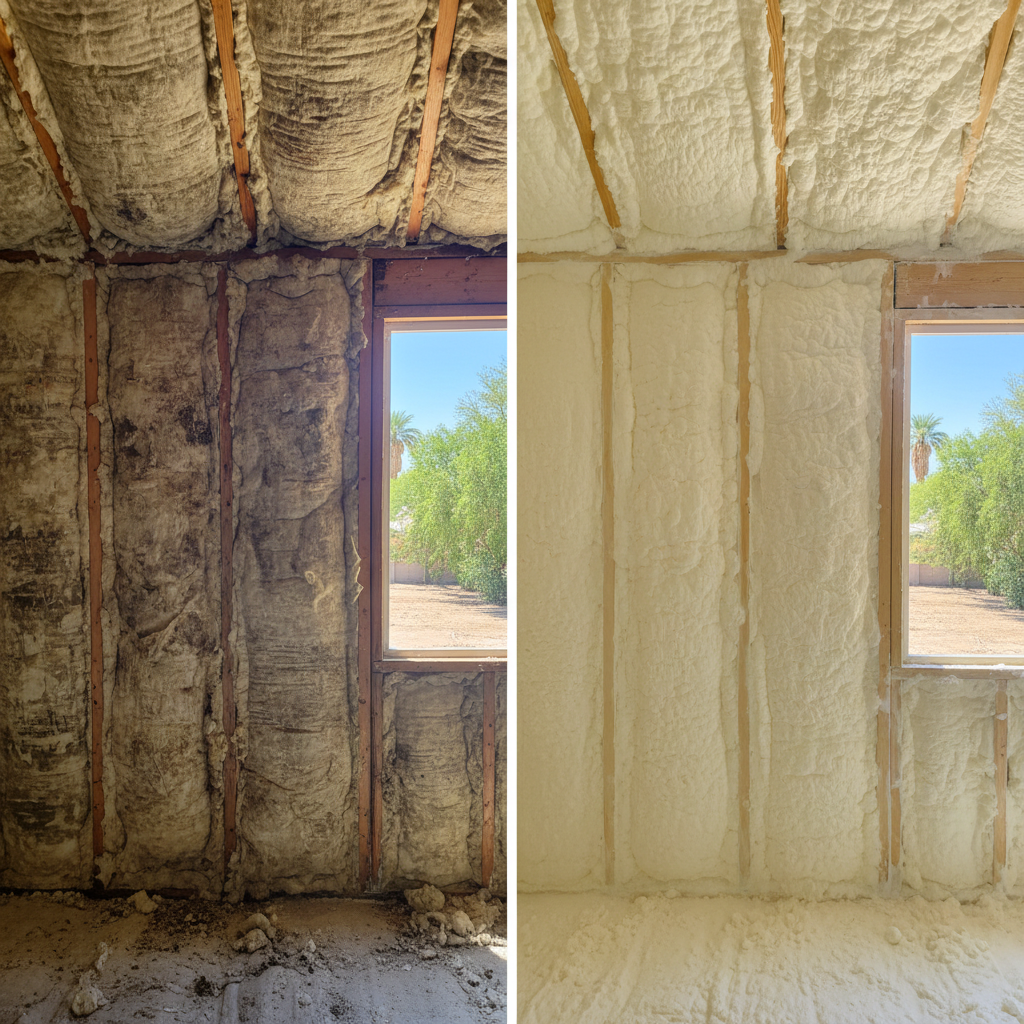
Alright, let's talk about open cell spray foam. Maybe you've heard about it, or you're thinking of putting it in your Gilbert home, which, honestly, is a smart move. It's fantastic for sealing up air leaks and making your place way more comfortable and energy-efficient. But here's where things can get a little tricky: it's not a one-size-fits-all kind of deal. When it comes to open cell, you've mainly got two ways to go: 'flash and batt' or 'full fill.' Knowing the difference, especially with our Arizona heat, will save you a ton of headaches and money down the road. Trust me on this one.
What Exactly is 'Flash and Batt'?
So, 'flash and batt' is pretty much what it sounds like. We put down a thin layer — a 'flash' — of open cell spray foam right onto your sheathing or the back of your drywall. This layer is usually just an inch or two thick. Its main job? To create a super tight air seal. That's huge for us here in Gilbert because air leakage is a major reason why utility bills shoot through the roof. Just think about how much air can sneak in through all those tiny cracks and gaps in your walls and ceiling – it really adds up, especially when the AC is blasting away.
Once that flash coat is dry, we then come back and install traditional insulation, like fiberglass or mineral wool batts, right over it, filling the rest of the cavity. The idea is that the spray foam takes care of the air sealing, which batts aren't great at, and the batts provide most of the R-value, or thermal resistance. It's kind of a hybrid approach, trying to get the best of both worlds, you know?
And 'Full Fill' Open Cell?
Now, 'full fill' is a totally different animal. With this method, we spray the open cell foam directly into the entire cavity – whether it's a wall, ceiling, or floor joist – until it completely fills the space. No batts, no other materials. Just open cell foam from front to back, usually expanding to fill every single nook and cranny. This means it's doing both jobs: sealing air and providing the R-value.
The foam expands and cures, creating one solid, continuous layer of insulation. It's pretty cool to watch, actually. It gets into all those awkward spots that batts just can't reach, like around electrical boxes, plumbing, and those tricky corners in older homes around the Val Vista Lakes area where the framing might not be perfectly consistent.
Let's Talk Money: Where Does Your Cash Go?
This is usually the first question I get, and it's a fair one. Generally speaking, 'flash and batt' usually costs less upfront than 'full fill.' Why? Because you're using less spray foam. The batts that go in afterward are typically cheaper per R-value than spray foam. So, if your budget is the absolute top priority and you still want some of the air-sealing benefits of spray foam, flash and batt can be a pretty appealing choice.
However, 'full fill' open cell, while costing more initially, often performs much better. You're getting a complete air seal and a consistent R-value throughout the entire cavity. Over the long run, that better performance can mean bigger energy savings, potentially making up for the higher upfront cost. It's an investment, pure and simple.
Durability and Maintenance: What Lasts Longer?
Both methods, when installed correctly by a pro like us at Gilbert Spray Foam Insulation, are super durable. Open cell foam itself is a stable material. It won't settle, sag, or break down over time like some traditional insulations can. That's a huge plus in our dry, hot climate where materials really take a beating.
With 'flash and batt,' you've got two different materials in the cavity. The foam layer is durable, but the batts can sometimes be vulnerable to moisture if there's a leak, or they might shift a bit over many years. 'Full fill,' being a single, continuous material, tends to be a bit tougher when it comes to keeping its integrity over decades. There's less chance for anything to move or shift around.
Maintenance? Neither really needs any. Once it's in, it's in. The main thing is just making sure you don't damage it if you're doing renovations down the line. But that applies to any insulation, doesn't it?
Appearance (Before Drywall, Of Course)
This might seem like a minor point, but it matters to some folks. With 'flash and batt,' you'll see that thin layer of foam, and then the batts tucked in. It looks like a hybrid system, which it is. It's neat, but you can still clearly see the different parts.
'Full fill' open cell, on the other hand, looks like a uniform, fluffy, often light yellow or white cloud filling the entire cavity. It's a very clean, consistent look. Not that anyone's going to see it once the drywall is up, but it really shows how thorough the application was.
Performance in Gilbert's Heat: My Recommendation
Here's where the rubber meets the road, especially for us here in Gilbert. Our summers are brutal. We're talking 110+ degrees for weeks on end. Air conditioning runs constantly, and any weak spots in your home's thermal envelope get exposed fast.
While 'flash and batt' is definitely better than just batts alone, my clear recommendation for Gilbert homeowners is 'full fill' open cell spray foam. Here's why:
- Superior Air Sealing: This is the big one. 'Full fill' creates an unmatched air barrier. In our climate, stopping hot air from getting into your home is just as important, if not *more* important, than R-value alone. Those tiny gaps that can still exist with batts, even over a flash coat, become pathways for heat to sneak in.
- Moisture Control: Open cell foam allows for some moisture to pass through, which is generally good for wall assemblies because it lets the wall 'breathe' if any moisture gets in. But the complete seal of 'full fill' helps manage the overall moisture load in your home, which can be a real concern with our monsoon season humidity swings.
- Consistent R-Value: With 'full fill,' you're getting a consistent R-value across the entire surface. No thermal bridging through studs, no gaps around pipes. It's like a continuous blanket of insulation.
- Sound Dampening: A dense, full-fill application of open cell foam also does an excellent job of cutting down on noise transfer. If you live near a busy road or just want a quieter home, this is a noticeable perk.
Think about it this way: when you're trying to keep a refrigerator cold in a hot garage, you don't just put a thin seal around the door and then throw some blankets over it. You want that door sealed tight and the whole thing insulated perfectly. Your home is the same. The more complete and continuous the barrier, the better it's going to perform against our relentless sun.
You're investing in comfort and energy savings for decades. Going with the 'full fill' open cell approach means you're getting the absolute best performance open cell can offer, specifically designed to stand up to the unique challenges of a Gilbert summer. It's a decision you won't regret when your AC bill comes in significantly lower, believe me.