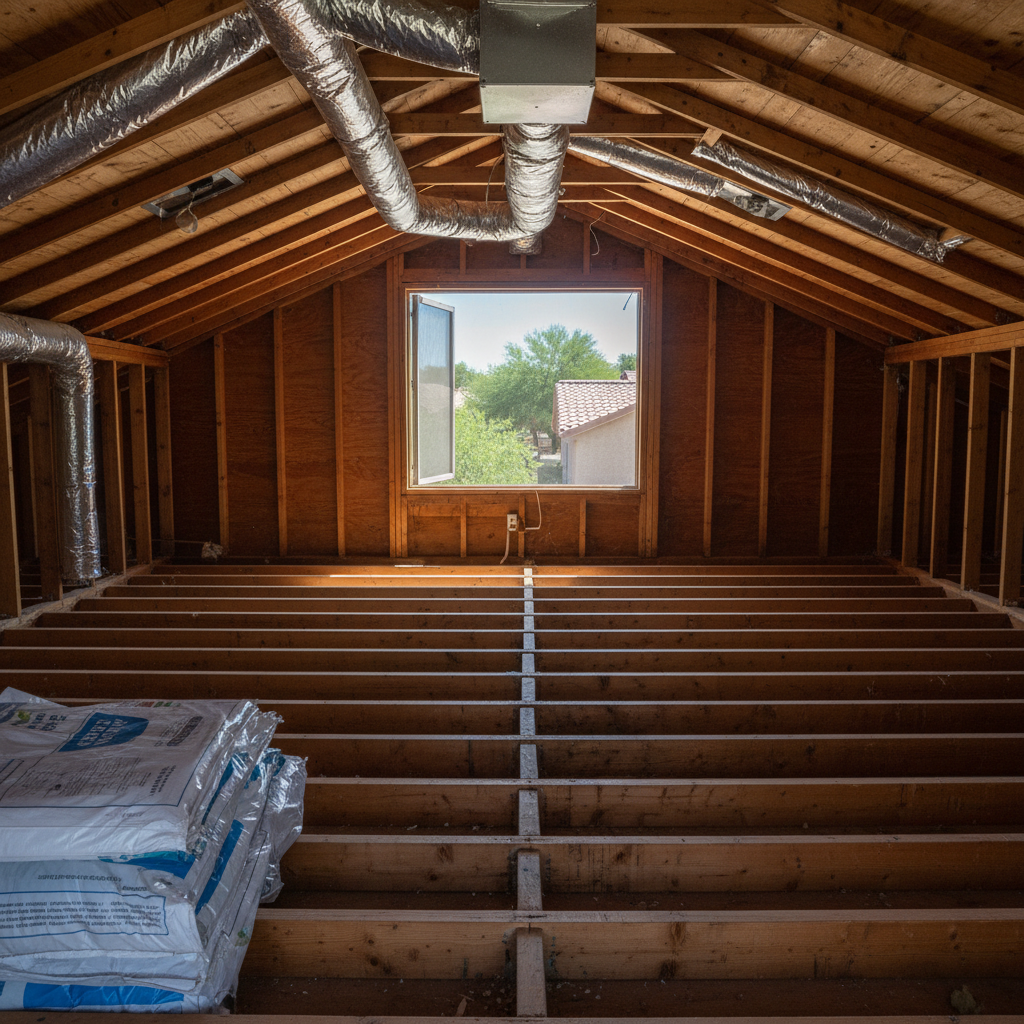
So, you're thinking about upgrading your home's insulation, maybe swapping out that old, dusty fiberglass for some modern spray foam? That's a really smart move for both comfort and your energy bills, especially here in Gilbert. But here's the thing: before you can put in the good stuff, sometimes you've got to get the old stuff out. And that's exactly where insulation removal comes in.
Why Even Bother Removing Old Insulation?
You might be asking yourself, "Do I really need to remove it?" Can't we just blow new insulation right over the old? Sometimes, sure, you can. But often, that's a pretty bad idea. If your old insulation is:
- Damaged by water or mold (yuck!)
- Contaminated by pests – think rodents, birds, or even insects
- Sagging, clumpy, or just not doing its job anymore
- A fire hazard (some really old types, believe it or not)
- Getting in the way of proper air sealing or spray foam application
Then, yeah, you absolutely need to get it out. Leaving contaminated or ineffective insulation in place is just asking for more problems down the road. You wouldn't build a brand new house on a rotten foundation, would you? It's the same principle here.
What Makes Insulation Removal Costs Go Up or Down?
Alright, let's talk about money. There's no single price for this kind of work because a few key things really push the cost one way or the other:
- Type of Insulation: Loose-fill stuff, like blown-in cellulose or fiberglass, is generally easier and quicker to remove than batt insulation, especially if it's stapled down. Spray foam removal? That's a whole different animal, usually much more labor-intensive and expensive.
- Amount of Insulation: This one's pretty obvious. A small attic with six inches of old blown-in is a lot less work than a huge attic packed with twelve inches. We usually price by the square foot, but the depth really matters too.
- Contamination Level: If we're dealing with rodent droppings, urine, or mold, that's biohazard work. It means we need specialized equipment, protective gear, and super careful disposal. This adds a lot to the cost because it's not just removal; it's remediation.
- Accessibility: How easy is it to actually get into your attic? Is it a tight crawl space, or can a person stand up straight? Are there a bunch of obstructions in the way? The harder it is to move around and get equipment in and out, the more time it takes, and time, as they say, is money. Those older homes in the Val Vista Lakes area with really low-pitch roofs can be a real headache, for example.
- Disposal Fees: We have to take all that old insulation somewhere, right? Landfills charge by weight or volume, and those fees are always part of your total cost.
Typical Cost Ranges Here in Gilbert, AZ
I'm going to give you some realistic ranges based on what I've seen firsthand here at Gilbert Spray Foam Insulation. Just remember, these are estimates, and every job truly is unique.
- Standard Blown-In or Loose-Fill Removal (no contamination): For a typical 1,500-2,500 sq ft attic with average depth (say, 6-10 inches), you're usually looking at about $1.50 - $2.50 per square foot. So, for a 2,000 sq ft attic, that's roughly $3,000 - $5,000. This includes vacuuming out the material and basic cleanup.
- Batt Insulation Removal (no contamination): This can be a bit more labor-intensive, especially if it's stapled in place. Expect to pay around $2.00 - $3.50 per square foot.
- Contaminated Insulation Removal (rodents, mold, etc.): This is where costs really jump because of all the specialized cleanup and disposal. For a 2,000 sq ft attic, you could be looking at anywhere from $4.00 - $8.00+ per square foot, or even more for really severe cases. This often includes sanitizing the space and sometimes even air sealing any entry points for pests.
- Spray Foam Removal: This is the toughest, and yes, the most expensive. It usually means cutting or scraping it out. Costs can easily hit $10.00 - $20.00 per square foot, sometimes more, depending on the thickness and how well it stuck. Most folks only remove spray foam if there's a serious problem, like it was installed incorrectly or there's a major roof leak.
So, for a standard, non-contaminated blown-in removal in a 2,000 sq ft attic, you're probably in the $3,000 to $5,000 ballpark. If there's significant contamination, that could easily double. See why it's so important to get a good quote?
What's Actually Included in a Quote?
When we give you a quote, here's what you should expect it to cover:
- Labor: The crew's time for setting up, removing the insulation, and cleaning up afterward.
- Equipment: We're talking powerful insulation vacuums, hoses, safety gear, respirators, you name it.
- Disposal: Hauling away all that old insulation and paying the landfill fees.
- Site Protection: Laying down tarps, sealing off living areas to keep dust and debris from messing up your home.
- Basic Cleanup: Vacuuming up any stray bits in the attic and around the access point.
If there's contamination, the quote will also include things like biohazard suits, specialized disinfectants, and sometimes even air scrubbers.
How to Avoid Overpaying (Because Nobody Wants That)
You don't want to get ripped off, and frankly, I don't want you to either. Here's what you can do:
- Get Multiple Quotes: Always get at least three detailed quotes from reputable local companies. Don't just go with the cheapest; compare what's actually included.
- Ask for Itemized Quotes: Make sure the quote breaks down labor, disposal, and any special services (like pest cleanup).
- Check References and Reviews: See what other Gilbert homeowners are saying about their experience with a company.
- Understand the Scope: Be super clear on exactly what's being removed, from where, and to what extent. Ask about cleanup procedures.
- Don't Be Afraid to Ask Questions: If something isn't clear, ask! A good contractor will be happy to explain everything.
Insulation removal is a dirty, dusty job that's really best left to the pros. It's an investment in a healthier, more efficient home, especially when you're getting ready for a new, high-performance insulation system like spray foam. Do your homework, get solid quotes, and you'll be well on your way to a more comfortable Gilbert home.