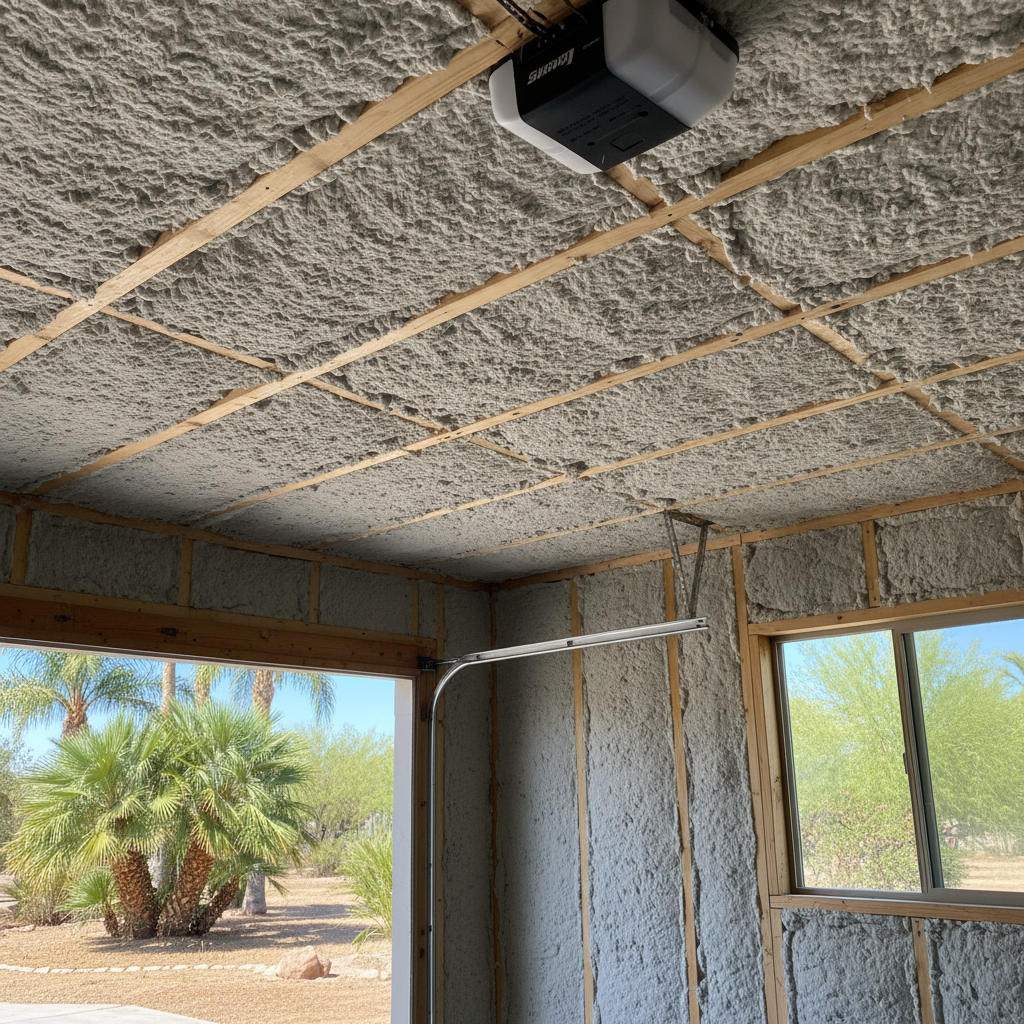
Why bother insulating my garage in Gilbert? It's not a living space.
That's a common thought, and hey, I get it. For many folks, the garage is just a place to park the car or stash some junk. But here in Gilbert, especially with our scorching summers, an uninsulated garage does more harm than you might think. First, if you've got a shared wall between your garage and your living space, that uninsulated wall acts like a giant heat sink. It constantly radiates heat into your house, making your AC work overtime and jacking up your power bills. Even if it's detached, consider what you keep in there: paints, chemicals, tools, maybe even an extra fridge. Extreme heat can ruin electronics, degrade chemicals, and just make your garage an unbearable spot to work on projects. Really, it's about protecting your home investment and your stuff, plus making the space useful all year.
What's the best type of insulation for a garage door?
Garage doors are tricky, right? They move, and they're usually pretty thin. You can't just cram them full of thick insulation. For doors you already have, rigid foam panels (like polystyrene or polyisocyanurate) are typically the best bet. They're light, easy to cut to fit the door panels, and give you a decent R-value without adding so much bulk or weight that it strains your opener. You'll want to make sure they're sealed well around the edges to stop air leaks. Some people try bubble wrap insulation, but honestly, that won't give you the thermal performance you truly need here in the Arizona heat. If you're buying a new door, look for one that comes pre-insulated from the factory. They're built to handle the extra weight and often have better seals.
Can insulating my garage really make my house cooler?
Absolutely, it can. Picture your garage as a big oven sitting right next to or under your house. On a 115-degree Gilbert summer day, the temperature inside an uninsulated garage can easily hit 130-140 degrees. If that garage shares a wall or ceiling with your living room, kitchen, or a bedroom, that heat will transfer right through. Your air conditioner then has to work harder to cool those adjacent rooms, fighting a losing battle against all that radiant heat. Insulating the garage walls and ceiling — and especially the garage door — creates a thermal barrier. It keeps a good chunk of that extreme heat out of the garage. This, in turn, reduces the heat load on your entire home. You'll feel the difference, and your AC unit will thank you for it.
Do I need to worry about ventilation if I insulate my garage?
Yes, you definitely do. Insulation slows down heat transfer, but it also seals things up tight. If you use your garage for anything that makes fumes – like working on cars, using certain chemicals, or even just running a gas-powered lawnmower – good ventilation is super important. Even without those activities, a sealed-up garage can get stuffy. You don't want moisture getting trapped either, which can lead to mold or mildew problems, especially in a space that might not get much direct sunlight. Think about adding a vent fan, either a passive one or an active exhaust fan, particularly if you're really buttoning up the space. It's all about finding that balance between thermal performance and healthy air quality. We see a lot of older homes around the Val Vista Lakes area with attached garages that have no real ventilation, and when those get insulated, it's something we always bring up.
What's the deal with insulating the ceiling if there's a room above it?
This is a big one. If you have a bonus room, a bedroom, or any living space directly above your garage, insulating that garage ceiling isn't just a good idea, it's totally essential. That floor/ceiling assembly is basically a thermal bridge between your super-hot garage and your conditioned living space. Without proper insulation, all that heat from below constantly radiates up into your room, making it uncomfortable and expensive to cool. We usually suggest a good dense-pack insulation, like spray foam or dense-packed fiberglass, in those joist bays. It creates a solid barrier, helps with sound dampening too, and really makes a difference in the comfort and energy efficiency of that room upstairs. It's one of the best investments you can make for a more comfortable home, period.
Can I insulate my garage myself, or should I hire a pro?
Look, some insulation projects are definitely DIY-friendly. If you're just adding some rigid foam panels to an existing garage door, that's pretty straightforward. But when you're talking about insulating walls, ceilings, or using more specialized materials like spray foam, things get complicated fast. You've got to deal with framing, electrical outlets, plumbing, and making sure you get a proper seal without creating moisture issues. Getting the right R-value, ensuring no thermal bridging, and handling materials safely are all things we do every single day at Gilbert Spray Foam Insulation. If you're looking for a truly effective, long-lasting solution that maximizes your energy savings and comfort, bringing in an experienced contractor is usually the smartest move. We've seen plenty of DIY attempts that end up costing more to fix than if they'd just called us in the first place.
Will insulating my garage help with noise?
It definitely can. Insulation isn't just about thermal resistance; it also has acoustic properties. While it won't completely soundproof your garage, adding insulation to the walls and ceiling will significantly cut down on noise transfer. If you've got a noisy workshop, a band practicing, or just a loud garage door opener, insulating those surfaces will help absorb some of that sound. This means less noise bothering the rest of your house and potentially less noise escaping to your neighbors. It's a nice bonus benefit that often gets overlooked when people are just thinking about temperature control, isn't it?