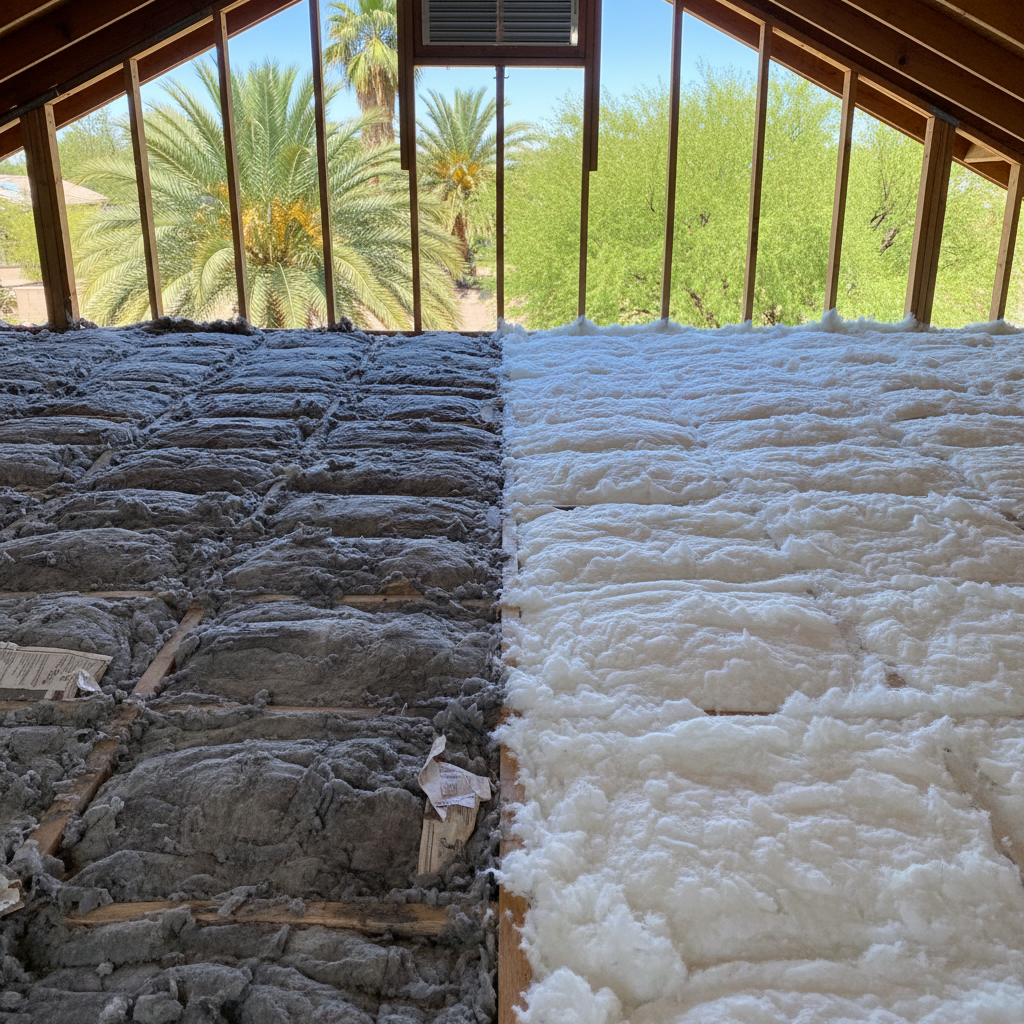
Blown-In Insulation: Cellulose vs. Fiberglass for Your Gilbert Home
Alright, let's talk blown-in insulation. When folks in Gilbert want to beef up their attic insulation, they usually hear about two main types: cellulose and fiberglass. Both are good options, sure, but they've got some key differences you should know about, especially with our Arizona heat.
First off, what are we even talking about? Blown-in insulation means we use a machine to blow loose material into your attic space. It fills all the nooks and crannies, which is great for getting an even R-value across your whole attic floor. It's a popular choice for existing homes because it's less disruptive than tearing out drywall just to put in batts.
Cellulose: The Recycled Option
Cellulose insulation is made mostly from recycled paper products, like old newspapers and cardboard. We treat it with chemicals to make it fire-retardant and pest-resistant. You'll usually see it as a gray, fluffy material.
- Cost: Generally, cellulose can be a bit more expensive to buy than fiberglass. Installation costs can vary, though, depending on the contractor and the specific job. It's not a huge difference, but it's something to think about.
- R-Value: Cellulose often boasts a slightly higher R-value per inch compared to fiberglass. That means you might get a little more insulating power for the same depth. In our scorching summers, every bit helps keep that heat out of your living space, doesn't it?
- Durability and Settling: This is where it gets interesting. Cellulose can settle over time, especially if it's not installed properly or if there's a lot of vibration. When it settles, its R-value goes down because it gets denser. You might need to top it off after a few years to maintain that original R-value. It's also pretty good at absorbing moisture, which isn't ideal if you ever have a roof leak.
- Pest Resistance: The fire-retardant chemicals also help deter pests. I've seen fewer issues with rodents or bugs nesting in cellulose compared to untreated materials, which is a definite plus for any homeowner.
Fiberglass: The Tried and True
Fiberglass insulation is made from fine strands of glass, melted down and spun into fibers. It's often pink, yellow, or white, and it's probably what most people picture when they think of insulation.
- Cost: Fiberglass is typically a bit cheaper upfront than cellulose. It's widely available, which helps keep prices competitive.
- R-Value: Its R-value per inch is usually a touch lower than cellulose, but it's still very effective. You might just need a little more depth to hit the same R-value as cellulose, that's all.
- Durability and Settling: This is a big win for fiberglass. It's much less prone to settling than cellulose. Once it's blown in, it pretty much stays put, maintaining its R-value for the long haul. It's also not as absorbent as cellulose, so if you do get a small leak, it's less likely to hold onto moisture and cause issues.
- Pest Resistance: While it's not a food source, fiberglass doesn't have the same chemical deterrents as cellulose. Pests can still tunnel through it if they want to, though it's not their first choice for a home.
My Recommendation for Gilbert Homes
Look, both materials will insulate your home. But for folks living in Gilbert, with our intense dry heat and occasional monsoon downpours, I generally lean towards blown-in fiberglass for attic spaces.
Here's why: The settling issue with cellulose is a real concern. You want your insulation to perform consistently year after year, especially when your AC is working overtime in July and August. Fiberglass holds its R-value better over time, meaning you're not losing insulation performance down the road. Plus, while neither is completely waterproof, fiberglass handles incidental moisture a bit better without turning into a soggy mess. I've seen homes in Seville and other communities with older cellulose insulation that's settled so much it's barely doing its job anymore.
Now, if you're looking for the absolute best insulation solution for your Gilbert home, especially for maximum energy efficiency and air sealing, you really can't beat spray foam. That's what we specialize in at Gilbert Spray Foam Insulation, and it's a whole different ballgame when it comes to keeping your home cool and your energy bills down. But for blown-in, fiberglass is a solid, reliable choice that gives you great bang for your buck.
Whatever you decide, make sure you're getting enough R-value for our climate. The recommended R-value for attics in our zone is R-38 to R-60, so don't skimp. A properly insulated attic makes a huge difference in your comfort and your wallet.